
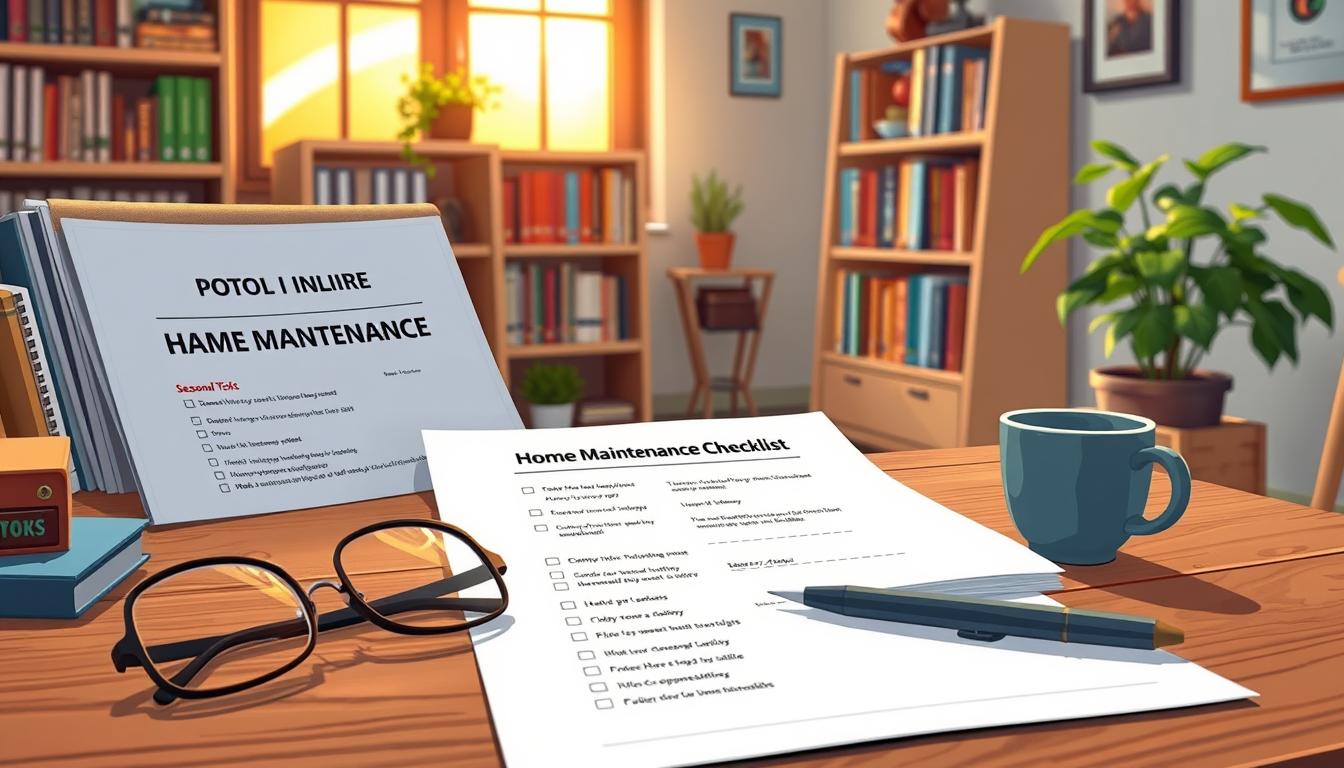
Owning a home is a big deal. It needs care all year. This keeps it safe and valuable for a long time.
Using a home maintenance checklist helps. It makes big tasks smaller. This fits into your busy life.
A good home maintenance plan stops big repairs. It also makes big systems last longer.
Doing these things saves money. It also gives you peace of mind. A little work now keeps your home strong for years.
The Importance of a Consistent Home Maintenance Checklist
Keeping your home in good shape is easier than you think. A home maintenance checklist helps you avoid big problems. It stops small issues from turning into big, costly repairs.
Having a home maintenance schedule is like having a map for your home. It breaks down big tasks into smaller ones. This way, you can fix things before they get worse.
Being consistent is key to taking care of your home. A home maintenance schedule helps you catch problems early. It keeps your home safe and comfortable for everyone.
Spring Cleaning and Exterior Property Assessment
When it gets warmer, we need to take care of our homes. We should check how winter affected our property. This helps avoid big problems later.
Inspecting the Roof and Gutters
The roof gets hit hard by snow and ice. Look for missing or damaged shingles. Also, clean out gutters to keep water away from your house.
Blocked gutters can hurt your house. Make sure downspouts are far from your foundation. This keeps your house safe.
Preparing the Lawn and Garden Irrigation
When the ground thaws, it’s time for the lawn. Check irrigation heads for damage. This helps fix problems before summer gets hot.
Adding mulch helps keep soil moist. It’s also good to aerate your lawn. This helps your lawn grow strong.
Checking Exterior Siding and Foundation
Winter can damage your house. Look for cracks in the foundation or siding. These home improvement tasks keep pests and water out.
Deep cracks need a good sealant. Keeping up with home maintenance schedule keeps your house in great shape all year.
| Exterior Area | Primary Task | Frequency |
|---|---|---|
| Roof | Check for loose shingles | Annually |
| Gutters | Clear debris and flush | Bi-annually |
| Foundation | Seal small cracks | Annually |
| Irrigation | Test sprinkler heads | Seasonally |
Summer Maintenance for Cooling and Outdoor Living
When it gets hot, taking care of your home is key. It keeps your family cool and safe. By fixing things early, you avoid big problems later.
Servicing Air Conditioning Systems
Keeping cool is important in summer. Get a pro to check your AC. Regular maintenance saves money and makes your AC last longer.
- Replace air filters every 30 to 90 days.
- Clear debris from the outdoor condenser unit.
- Check refrigerant levels with a certified technician.
Maintaining Decks and Patios
Outdoor spaces get worn down by sun and people. Fixing your deck or patio keeps it nice and safe. A new sealant coat stops water damage and splinters.
Check the safety of railings and stairs too. Make sure everything is tight. This keeps your outdoor space safe and valuable.
Testing Smoke and Carbon Monoxide Detectors
Summer is not a time to forget about safety. Test your smoke and carbon monoxide detectors right away. Working alarms mean peace of mind and safety for your family.
Press the test button on each detector. If it doesn’t work, change the batteries or the whole thing. Keeping these devices working is a big part of home care.
Autumn Preparations for Colder Weather
Autumn is the best time to fix essential home repairs before it gets cold. Doing these repairs now keeps your home cozy and saves money later. These property maintenance tips help you avoid expensive fixes when it’s really cold.
Winterizing Plumbing and Outdoor Faucets
Frozen pipes can cause a lot of damage in winter. It’s smart to disconnect garden hoses and drain outdoor faucets. This stops water from expanding and damaging pipes.
- Install insulated covers on exterior spigots for added protection.
- Shut off interior valves that lead to outdoor water lines if possible.
- Drain irrigation systems completely to avoid cracked pipes underground.
Cleaning and Inspecting the Chimney
A clean chimney is key for safe and efficient fireplace use. Doing these home improvement tasks early stops creosote buildup. Creosote is a big fire risk.
Get a certified pro to check the flue for cracks or blockages. Make sure the damper works right too. This keeps the air inside your home clean and warm.
Sealing Windows and Doors for Energy Efficiency
Drafty windows and doors raise your heating bills. Use fresh weatherstripping or caulk to seal them. This keeps warm air in and cold air out.
These essential home repairs are easy and save money on energy. Here’s a table to help you choose the right sealing method for your home:
| Method | Best Use | Durability |
|---|---|---|
| Weatherstripping | Door and window edges | High |
| Silicone Caulk | Stationary frame gaps | Very High |
| Foam Tape | Temporary seasonal gaps | Low |
Winter Indoor Tasks and Safety Checks
When it gets cold, keeping the air inside your home clean and safe is key. Using property maintenance tips helps keep your home healthy and safe. This way, you can avoid problems that come from closed windows and constant heating.
Monitoring Indoor Humidity and Ventilation
Keeping the right humidity level is important to stop mold and stay comfy. The ideal humidity is between 30% and 50% in winter. A hygrometer helps you check this, and using exhaust fans in kitchens and bathrooms helps air move better.
Regular residential upkeep means making sure vents are clear. If you see condensation on windows, it means the air is too wet. Opening windows a bit each day helps to clear out moisture and refresh the air.
Inspecting Basements and Attics for Leaks
Basements and attics are often ignored but are most at risk for water damage in winter. Look for dampness, water stains, or frost on rafters and walls. Fixing small leaks early can save you from big damage and expensive fixes later.
Testing Electrical Outlets and Circuit Breakers
Keeping your electrical systems safe is crucial for home safety maintenance. Overloaded circuits are a big risk in winter with all the extra lights and heaters. Check GFCI outlets every month to make sure they work right and look at circuit breakers for wear or frequent trips.
| Task Category | Frequency | Primary Goal |
|---|---|---|
| Humidity Monitoring | Weekly | Prevent Mold Growth |
| Attic/Basement Check | Monthly | Detect Water Leaks |
| Electrical Testing | Quarterly | Ensure Fire Safety |
Essential Monthly Maintenance Habits
Keeping a house in top shape needs small, consistent efforts every month. By spending a few hours on these tasks, you can avoid costly repairs. This home repair guide shows simple habits to prevent long-term damage.
Replacing HVAC Air Filters
One key DIY home maintenance task is checking and replacing HVAC air filters. A clean filter makes your heating and cooling system work better. This saves money on energy bills. Homeowners should check these filters every thirty days to keep the air inside clean.
Cleaning Garbage Disposals and Drains
Kitchen drains get clogged with grease and food. Running ice and rock salt through the garbage disposal sharpens the blades and clears debris. Flushing drains with hot water and baking soda keeps them clear and stops bad smells in the kitchen.
Testing Sump Pumps
A working sump pump is key for home safety maintenance, especially in heavy rain or snowmelt. Testing it monthly makes sure it works right. If it doesn’t, it could cause big water damage in basements or crawl spaces.
| Task | Frequency | Primary Benefit |
|---|---|---|
| HVAC Filter Check | Monthly | Improved Air Quality |
| Drain Maintenance | Monthly | Prevents Clogs |
| Sump Pump Test | Monthly | Flood Prevention |
Managing Plumbing Systems and Water Quality
Looking after your plumbing can save you money and prevent damage. A good home repair guide helps keep your systems working well all year. Taking care of these parts is key to being a good homeowner.
Checking Water Heaters for Sediment
Minerals in the water settle at the bottom of the tank over time. This creates sediment that makes the heater work harder. Flushing the water heater every year helps it last longer.
To do this, turn off the heater’s power or gas. Use a garden hose on the drain valve at the tank’s bottom. Aim the water at a floor drain or outside. This keeps your heater running well and saves you money.
Inspecting Toilets and Faucets for Leaks
Leaks can be hidden and cause big problems or high bills. Look under sinks and around toilets for moisture. This helps stop damage and keeps your home’s value up.
Here are some quick tips to check your fixtures:
- Look for dampness or water stains near the toilet base.
- Listen for running water in the toilet tank, which means a bad flapper.
- Check under faucet connections for drips or mineral buildup.
- Make sure shut-off valves turn easily in case of an emergency.
Fixing small problems early saves you from big costs. A well-maintained plumbing system keeps your home safe and efficient for many years.
Electrical Safety and Lighting Upgrades
Electrical safety is key to a safe and efficient home. By focusing on preventative home maintenance, you can prevent fires and save money. These small steps help keep your home’s value high.
Updating Light Fixtures to LED
LED lights are a great way to save energy. They use less power than old bulbs and cost less to use. Plus, they don’t get as hot, which lowers fire risks.
Changing to LEDs is easy for DIY home maintenance. They last longer, so you won’t need to change bulbs as often. It’s a smart choice for updating your home.
Inspecting Extension Cords and Power Strips
Check extension cords and power strips often for damage. Worn-out wires or broken insulation can cause fires. If you see damage, replace it right away.
Don’t overload power strips with too many devices. Using them as a permanent fix is not safe. By checking your power use, you keep your home safe for your family.
Appliance Care and Longevity Tips
Looking after your home starts with taking care of your appliances. These machines work hard every day. Simple steps can stop expensive repairs or early replacements. Adding these steps to your routine home care plan keeps your kitchen and laundry room working well for years.
Cleaning Refrigerator Coils
The condenser coils on your fridge keep it cool. Dust and pet hair on these coils make the fridge work harder. This can raise your energy bills and cause problems.
To clean these coils, unplug the fridge first. Find the coils at the back or bottom. Use a soft brush or vacuum to remove dust. Keeping these coils clean is key to home investment protection and saving on energy.
Maintaining Dishwasher and Washing Machine Seals
Rubber gaskets on your dishwasher and washer keep water in. Over time, they can get dirty and damaged. Wipe them with a damp cloth and mild soap to stop leaks and keep things running right.
If you smell something musty or see water near the door, check the seals. Regular routine home care helps spot problems early. These small habits are crucial for home investment protection and keeping your systems working.
| Appliance | Maintenance Task | Frequency |
|---|---|---|
| Refrigerator | Clean condenser coils | Every 6 months |
| Dishwasher | Wipe door gaskets | Monthly |
| Washing Machine | Clean rubber seals | Monthly |
| Dryer | Clear lint trap | Every load |
Structural Integrity and Pest Prevention
Keeping a home safe needs a plan to fight pests and care for surfaces. Doing household safety checks often helps find problems early. This stops big repairs later.
A strong home needs healthy wood and good exterior surfaces.
Identifying Signs of Termite Activity
Termites can harm a building without being seen. Look for mud tubes and hollow wood during a seasonal property inspection. They leave wings and sawdust-like stuff too.
Spotting them early stops big damage. Call a pest control pro fast if you see anything odd. This saves your home’s wood.
Sealing Cracks in Driveways and Walkways
Driveways and walkways crack from weather. Fixing them early stops water damage. Water can freeze and crack them more.
Good sealants keep your place looking nice and safe. They stop plants from growing in cracks too. Regular care keeps your home’s outside looking good for a long time.
| Maintenance Task | Frequency | Primary Benefit |
|---|---|---|
| Termite Inspection | Every 6 Months | Prevents Structural Decay |
| Driveway Sealing | Every 2 Years | Stops Water Penetration |
| Foundation Check | Annually | Ensures Overall Stability |
| Walkway Repair | As Needed | Reduces Trip Hazards |
Conclusion
Looking after a property needs hard work and a clear plan. A good home maintenance plan is key to a strong and efficient home.
Homeowners who focus on these tasks feel more at ease all year round. They stop small problems from becoming big, costly fixes. This keeps the home solid and all systems working well.
Doing regular safety checks makes a home safe for everyone. These easy steps lower risks and make life better at home. Being proactive is the best way to keep a house’s value up.
Getting a seasonal property check helps find problems early. This cycle of care makes sure every part of the home gets checked. Working hard now makes a home stronger and more comfy for the future.
Readers should start their own checklist this weekend. Small steps add up to big results in keeping a home lasting. Keeping a home in great shape is a rewarding journey that brings comfort and safety.