

In today’s digital age, language learning apps have transformed the way we approach acquiring new languages.
With a myriad of options available, these apps cater to various learning styles and preferences. Whether you’re a beginner or looking to enhance your skills, there’s an app to fit your needs.
This article explores the best language learning apps, their unique features, and how to effectively use them for your language journey.
Top Language Learning Apps of 2023
In 2023, several language learning apps stand out for their user-friendly design and effective teaching methods. One of the top contenders is Duolingo.
With its fun and interactive lessons, learners can practice speaking, reading, and writing in multiple languages. The app’s game-like approach makes language learning enjoyable and less intimidating for users of all ages.
Another popular option is Babbel. This app focuses on real-life conversations and practical vocabulary.
Unlike others, Babbel tailors each lesson to help you speak from the start, ensuring you gain confidence quickly. Its clear explanations and cultural tips make learning not just easier but also richer.
Lastly, Rosetta Stone is known for its immersive approach. This app encourages learners to think and understand a new language without relying on translations.
With voice recognition technology, users can practice their pronunciation and receive instant feedback. Rosetta Stone’s unique method helps push learners to engage deeply with the language.
How Language Learning Apps Work
Language learning apps are designed to make learning fun and effective. They use simple lessons that build on each other. Each session often includes speaking, reading, and writing exercises.
These interactive elements help users stay engaged and practice different skills at the same time.
One key feature of these apps is their use of spaced repetition. This means they remind learners to review words and phrases after some time. This method helps the brain remember information more effectively.
Users will see the same material again, but at the right time to improve recall.
Many apps also include speaking exercises that use voice recognition technology. This feature allows learners to practice their pronunciation and receive instant feedback.
By hearing their own voices, learners can adjust and improve their skills more quickly, making the process of learning a new language feel more natural.
Benefits of Using Language Learning Apps
Using language learning apps offers many advantages for learners at all stages. One major benefit is the flexibility they provide. Learners can study anytime and anywhere, fitting lessons into their busy schedules.
Whether you’re waiting for a bus or relaxing at home, these apps allow you to practice whenever it suits you.
Another benefit is the variety of learning methods available. Language learning apps often use games, quizzes, and interactive exercises to make studying enjoyable.
This fun approach keeps users motivated and makes it easier to remember new words and phrases. Engaging activities help prevent boredom, which can be common in traditional learning methods.
Finally, these apps create a personalized learning experience. They often adapt to each user’s progress, focusing on areas where improvement is needed.
As a result, learners can spend more time on challenging topics and less on what they already know. This tailored approach enhances efficiency and boosts confidence in language skills.
Comparing Popular Language Learning Apps
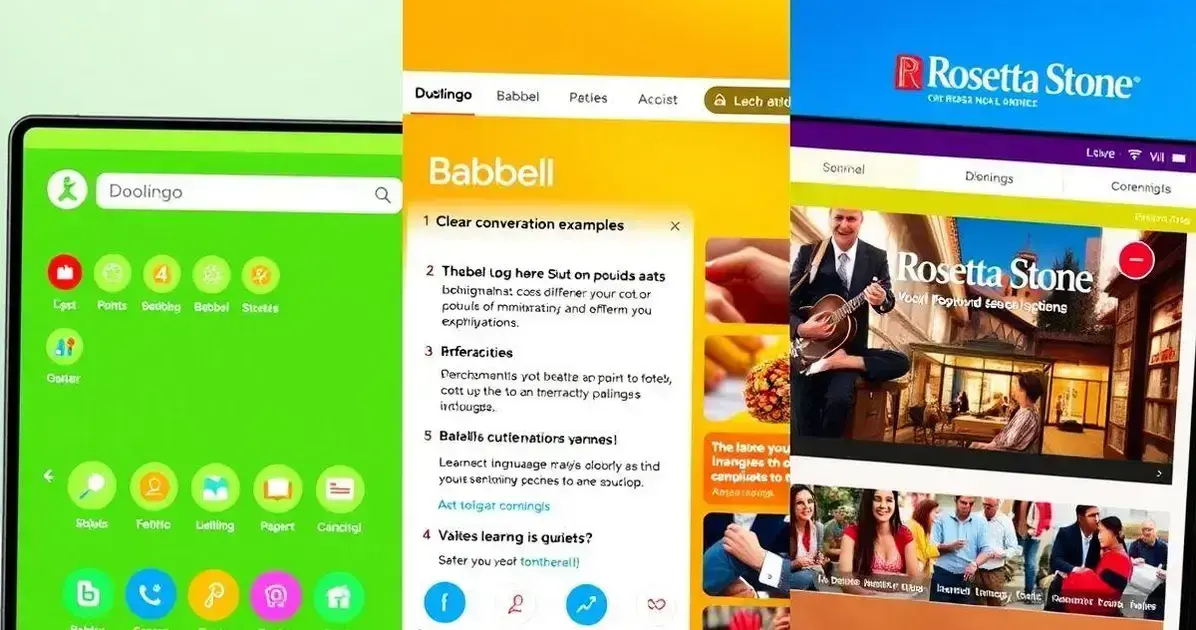
When comparing popular language learning apps, it’s important to look at their features and strengths. For example, Duolingo is known for its fun, game-like interface.
This app makes learning feel like a challenge, where users earn points and badges. It is great for beginners who want to start with basic vocabulary and grammar.
On the other hand, Babbel focuses on real-life conversation skills. The lessons are built around daily topics, making it easier for users to apply what they learn in real situations.
Babbel also offers detailed explanations about grammar rules, which can help learners understand the language better.
Rosetta Stone takes a different approach by immersing users in the language from the start. It uses pictures and audio to teach without translations.
This method helps learners think in the new language right away. It is particularly beneficial for those who want to develop their speaking and listening skills quickly.
Tips for Maximizing Your Language Learning App Experience
To get the most out of your language learning app, set specific goals for your study sessions. Instead of randomly practicing, aim for clear objectives, like finishing a lesson or mastering a set of vocabulary words.
This approach gives you direction and helps maintain focus during each study session.
Stay consistent with your learning by making it a daily habit. Even just 10 to 15 minutes each day can lead to significant progress over time. Consistency reinforces what you learn and helps keep the language fresh in your mind.
Try scheduling a regular time each day, so it becomes a part of your routine.
Lastly, don’t hesitate to use additional resources alongside your app. Watching movies, listening to music, or joining language exchange groups can deepen your understanding and enhance your learning experience.
These activities provide context and real-world usage of the language, making learning more enjoyable and effective.
Language Learning Apps: Future Trends in Language Learning Apps
The future of language learning apps will likely see even more personalization thanks to artificial intelligence. With AI, apps can track your progress in detail and adjust lessons based on your strengths and weaknesses.
This means users will receive a tailored learning experience that suits their individual needs perfectly, making it easier to master a new language.
Another trend is the integration of virtual and augmented reality technologies. These tools will create immersive environments where learners can practice speaking and interacting in real-life scenarios.
Imagine using a VR headset to order food in a restaurant or walk through a city while practicing conversational skills with virtual characters.
Lastly, social learning will play a bigger role in future language apps. Users will be able to connect with others who are learning the same language.
This could include live video chat features or community events where people practice together. Learning with others makes it more engaging and helps build confidence when speaking a new language.