

Biometric Banking Security Features are transforming the way we protect our financial lives. From unlocking your banking app with a glance to securing your account with your voice, these technologies are making access faster and safer.
By using unique physical traits instead of traditional passwords, banks can offer more personalized and efficient security. It’s not just about convenience—it’s a smarter way to protect what matters most.
Curious how this tech actually works, what the benefits are, and what’s next? Keep reading and discover how biometrics are shaping the future of secure banking.
Understanding Biometric Security Features in Banking
Understanding biometric security features in banking is essential for today’s digital world. Banks are using methods like fingerprints and facial recognition to keep your money safe.
These features offer a unique way to prove who you are, making it harder for thieves to access your accounts.
One major benefit of these security features is their ability to provide quick and easy access to your accounts. Instead of remembering complicated passwords, you can simply use your fingerprint or face.
This not only helps you to quickly bank online but also ensures that your personal information is better protected.
Furthermore, using biometric security adds an extra layer of safety compared to traditional passwords. Hackers find it hard to steal your biometrics.
This means that even if they get hold of your basic account information, they cannot break in without your unique biometric traits. This combination of ease and security makes biometric banking features a smart choice for everyone.
Types of Biometric Authentication Methods
There are several types of biometric authentication methods used in banking today. One popular method is fingerprint recognition.
This allows customers to unlock their accounts using their unique fingerprints, making it both secure and convenient. Banks use high-quality scanners to capture and verify these fingerprints for a fast and easy login experience.
Another common method is facial recognition. Customers can access their banking apps by simply showing their face to their smartphone camera.
This method uses advanced technology to match the unique features of a person’s face, providing a seamless and secure way to authenticate identity.
Voice recognition is also gaining popularity as a biometric authentication method. By analyzing a person’s voice patterns, banks can confirm their identity during phone calls.
This method adds another layer of security and is especially useful for those who prefer speaking to customer service representatives rather than using online services.
Benefits of Biometric Banking Security
One of the main benefits of biometric banking security is enhanced protection against fraud. Unlike traditional passwords, which can be stolen or guessed, biometric methods rely on unique personal traits.
This makes it incredibly difficult for hackers to break into accounts, keeping customers’ money and information safer than ever.
Another advantage is the convenience biometrics offer. Customers can quickly access their accounts without needing to remember complex passwords.
With just a fingerprint or a quick face scan, banking becomes faster and easier. This streamlined process improves the overall customer experience, making banking more user-friendly.
Furthermore, biometric banking security can help build trust between banks and their customers.
By using cutting-edge technology to secure accounts, banks show that they prioritize safety. This commitment to protecting personal information encourages customers to feel more confident when conducting their financial transactions.
Challenges in Implementing Biometric Solutions
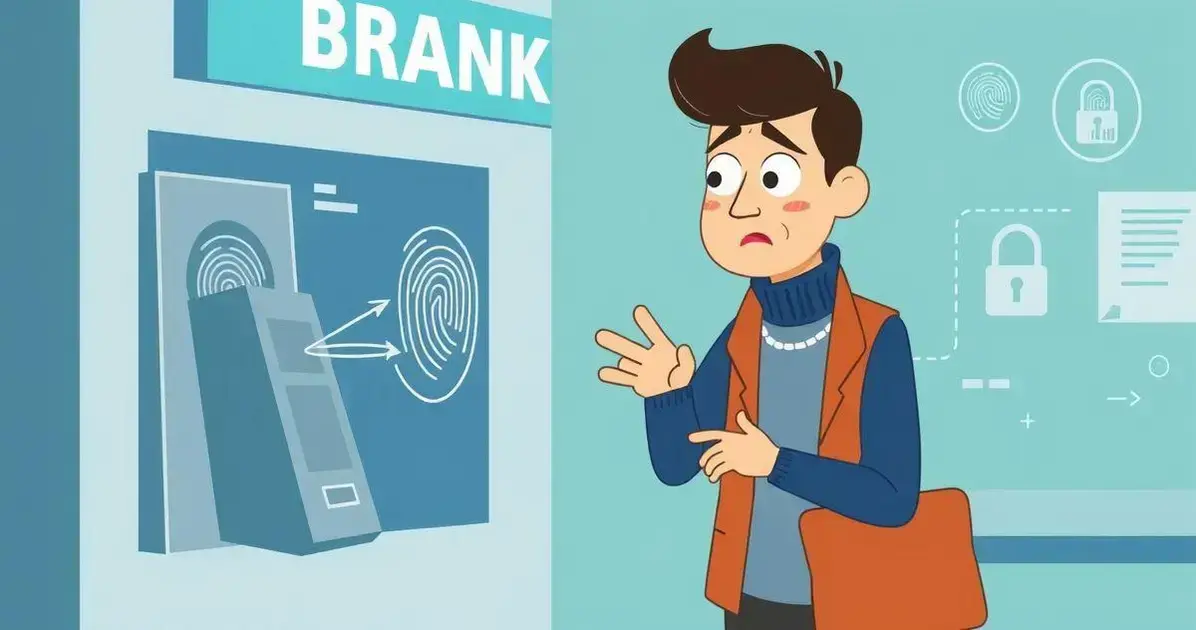
There are several challenges in implementing biometric solutions that banks must face. One major issue is the cost of the technology.
Setting up biometric systems, like fingerprint readers or facial recognition cameras, can be expensive. Banks need to invest in this technology to provide secure services, which can be a barrier for smaller institutions.
Another challenge is ensuring user privacy and data security. Customers may worry about how their biometric data is stored and used.
If personal information is not handled carefully, it could lead to data breaches, causing customers to lose trust in their bank’s ability to protect their sensitive information.
Finally, technical errors can also be a problem. Biometric systems need to work perfectly every time. If a fingerprint scanner fails or doesn’t recognize a user, it can lead to frustration.
Banks must ensure these systems are reliable and provide proper support to customers to help them navigate any issues that arise.
Biometric Banking Security Features: Future Trends in Biometric Banking Security
The future trends in biometric banking security are looking very promising as technology continues to evolve. One exciting trend is the adoption of multi-factor authentication.
This combines biometric methods with other security measures, like passwords or security tokens, to create a stronger defense against fraud. By using multiple verification methods, banks can offer even better protection for their customers.
Another trend is the use of artificial intelligence in biometric systems. AI can help improve the accuracy of facial and voice recognition. It can learn from patterns and adapt to new threats, making it more reliable over time.
This means that future biometric systems will not only be faster, but they will also become smarter in identifying potential risks.
Lastly, we can expect a growth in contactless biometric solutions. For example, palm recognition and iris scanning might become more popular, allowing customers to access their accounts without physical contact.
These advancements not only enhance security but also provide a more convenient experience for users, creating a seamless way to manage their banking needs.