
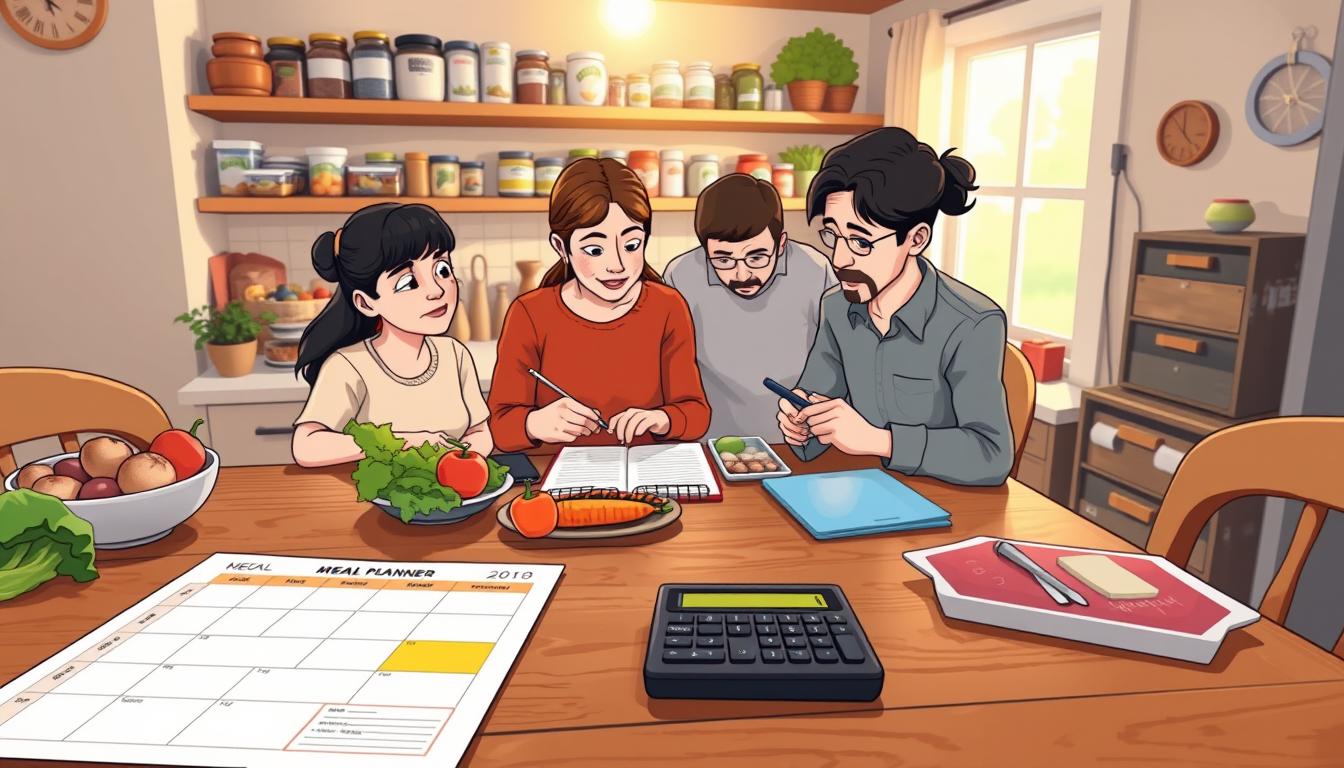
Low-cost meal planning helps a household decide how to use its grocery money before food choices strain the budget. It gives each meal a clear spending limit while leaving room for food the household enjoys. That can make grocery costs easier to manage from week to week.
A household food budget works best when it reflects the money available after essential bills. A unit price is the cost of a product for a standard unit of weight or volume, such as an ounce or a pound. It helps shoppers compare products with different package sizes.
Planning can also make the most of ingredients already at home. Rather than starting with a long wish list, a household can match meal choices to its available grocery money. The first step is setting a realistic grocery budget ceiling.
How to Start Low-Cost Meal Planning
The first step is setting a grocery limit the household can sustain after essential bills and obligations. A useful grocery budget ceiling comes from the household’s own needs and spending, not a generic national budget. It gives meal choices a clear boundary without assuming every household has the same costs.
For low-cost meal planning, the limit should cover groceries bought for home meals. Restaurant meals, takeout, and coffee bought away from home belong in separate spending groups. That split shows whether the grocery limit reflects food eaten at home.
Set a Grocery Budget Ceiling
Start with the money left after rent, utilities, transport, debt payments, and other essential obligations. Then consider household size and how many breakfasts, lunches, and dinners people usually eat at home. A household that often eats away from home may need less grocery money than one that prepares most meals.
The ceiling should cover the food the household actually needs. Include regular items such as school lunches, snacks, and drinks if they come from grocery stores. A limit set too low can make it hard to buy enough food or keep meals workable.
Check the Household’s Current Spending
Review grocery receipts, bank records, or store account histories from several recent weeks. Keep restaurant and takeout costs separate, even when the same card paid for them. Add grocery purchases together to see what the household really spends.
Compare that total with the planned ceiling over time, not from one unusual week. A holiday, a large pantry restock, or a change in household size can shift one week’s total. If grocery spending keeps running above the limit, adjust the ceiling or meal plans to fit actual needs.
Leave Room for Flexible Choices
A fixed weekly amount may not work when schedules, dietary needs, or food access change. Some weeks require quick meals, special foods, or extra trips to a store with limited options. A flexible amount can absorb those needs without turning every change into a budget failure.
The household can set a small amount aside for price changes or unexpected meals. It can also review the limit when work hours or the number of meals eaten at home shifts. With a workable spending limit in place, the household can choose a week of meals that fits it.
How Can a Weekly Menu Make the Budget Go Further?
Cooked rice from one dinner can become the base for egg fried rice another night. A weekly menu makes that kind of second use easier to plan, while keeping the grocery budget ceiling in view. Choosing meals that share ingredients can reduce one-off purchases and help the household use what it buys.
Choose Dinners That Share Ingredients
Build a weekly menu around ingredients that can appear in more than one meal. A bag of potatoes, for example, can serve as a side dish and a meal base. Flexible dinners can also change when a household has an ingredient ready to use.
| Dinner | Protein | Produce | Starch | Planned second use |
|---|---|---|---|---|
| Bean chili | Beans | Tomatoes and peppers | Rice | Chili becomes a baked-potato topping |
| Chicken with vegetables | Chicken | Frozen broccoli | Potatoes | Cooked chicken becomes a wrap filling |
| Lentil pasta | Lentils | Canned tomatoes and spinach | Pasta | Sauce becomes a lunch portion |
| Egg fried rice | Eggs | Mixed vegetables | Rice | Extra rice becomes a quick skillet meal |
| Baked potatoes with beans | Beans | Broccoli | Potatoes | Extra beans become a soup addition |
The table shows how a few ingredients can serve different meals. If one planned ingredient is unavailable, a flexible dinner can use a similar item already at home. The goal is a menu that can bend without requiring a separate shopping trip for every meal.
Plan a Second Use for Leftovers
Planned leftovers are food prepared in extra portions to eat later. A household can choose a second use before cooking, such as saving chili for potatoes or keeping sauce for lunch. That plan helps make the extra portion part of the menu, not forgotten food.
Some dinners can shift based on what remains after the first meal. A wrap filling can go into a salad or grain bowl if tortillas run out. Once the household knows what to cook, it can decide which ingredient forms and prices make sense at the store.
How Should Shoppers Compare Sales and Prices?
A sale price alone does not show whether a purchase saves money. Unit prices let shoppers compare different package sizes on a common basis, while a deal only helps when the food will be used. That makes the unit price more useful than the package price alone.
Compare Unit Prices, Not Just Package Prices
Check the unit price listed on the shelf tag for each size. A larger package may cost more at checkout but less per ounce. It is still a poor buy if the household cannot use it before the food spoils or takes up needed storage space.
Store brands can offer a suitable option when their ingredients and form match the planned meal. A sale item can work as well when it fits the menu or replaces a similar ingredient. A sale is not a saving if it leads to buying food the household will not use.
Use Sales to Make Flexible Swaps
Grocery sales can help shape a flexible dinner, rather than dictate a meal that needs several extra items. If frozen broccoli is on sale, it may suit a planned side or soup. Frozen produce also lets a household take only the amount needed for a meal.
| Produce form | Useful when | What to check | Storage or use |
|---|---|---|---|
| Fresh | Produce will be used soon | Condition and unit price | Plan storage for the item |
| Frozen | Flexible portions are useful | Package size and unit price | Keep frozen until needed |
| Canned | A shelf-stable backup is useful | Sodium or added syrup and unit price | Refrigerate unused contents after opening |
Fresh, frozen, and canned produce can all suit a meal plan. The best choice depends on how soon it will be used and how much the household needs. From good-value purchases, the next step is checking which ingredients are already in the pantry.
Which Pantry Staples Make Budget Meals Easier?
An almost-empty grocery list can still lead to an unnecessary store trip when a basic ingredient was overlooked. Rice, broth, or cooking oil may be all a household needs to turn available food into dinner. Useful pantry staples fill menu gaps and help prevent extra trips for one missing item.
Shelf-stable staples are pantry foods that keep without refrigeration. A quick pantry audit can show which ones are ready to use and which need replacing. Check each item’s amount, condition, and whether the household actually uses it.
- Rice and oats: make grain bowls, breakfast, or a filling side.
- Pasta: turns canned tomatoes and vegetables into a simple meal.
- Dried or canned beans and lentils: add protein to soup, bowls, or tacos.
- Canned tomatoes: form a base for pasta sauce, chili, or soup.
- Broth or bouillon: adds flavor to soup, grains, and cooked vegetables.
- Seasonings and cooking oils: add taste and help cook basic ingredients.
Buying bulk amounts of an unfamiliar staple can seem like a bargain, but it may sit unused or crowd needed storage space. A smaller amount is more useful when the household knows how it will fit a meal. Keeping useful staples ready leads naturally to storing and using cooked food before it goes to waste.
How Can Prep and Leftovers Reduce Food Waste?
A little advance preparation can make later meals easier and help ingredients get used. Small batch cooking tasks, such as cooking one shared grain, can save time without taking a full day. The household can prepare only what its menu needs soon.
Perishable food should generally go into the refrigerator within 2 hours, or within 1 hour when the temperature is above 90°F. Refrigerated leftovers are generally used within 3-4 days. The household should refrigerate food promptly instead of leaving it out until it cools completely.
- Cook a shared grain for meals planned over the next few days.
- Wash or cut produce that will be used soon.
- Portion leftovers into meal-sized containers.
- Label and date containers before putting them away.
- Freeze portions that will not be used in time.
Smaller containers help food chill and make it easier to take a single serving later. Labels show what each container holds and when the household stored it. If a portion will not be eaten within a few days, freezing it gives the household another way to use it later.
Preparation can stay modest: one grain, a few ready-to-use vegetables, or portions from dinner may be enough. These small habits help reduce food waste without requiring a long cooking session. Before the next grocery trip, one simple planning action can make the menu easier to shape.
Conclusion
A workable food budget depends on choices the household can maintain week after week. A realistic grocery limit gives meals a clear boundary, while a flexible menu can adjust around ingredients already available. Those two choices can keep planning practical when schedules or store options change.
The household does not need a perfect plan to begin. It can start with what is already in the kitchen and build meals from there. Before making the next grocery list, check current supplies and write down three dinners.